64DD - An Explainer
Published on 31 May 2026
This post is a summary for people who aren’t too familiar with the 64DD, as well as talking about all the games that came out on the device.
The Quick Explainer
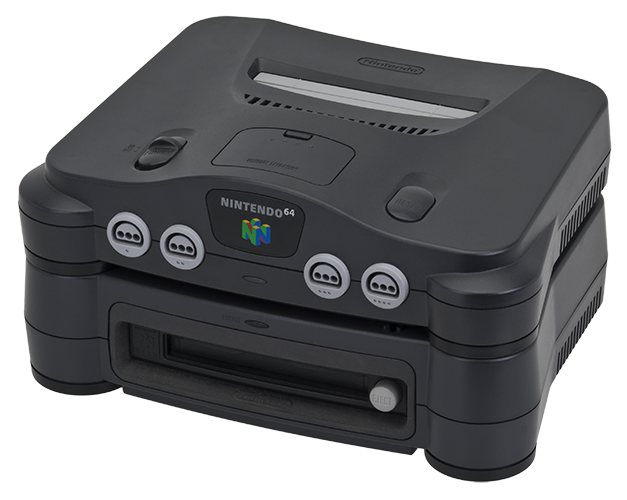 The 64DD is an add-on for the Nintendo 64 that launched only in Japan, it’s a proprietary floppy disk drive with a real-time clock included that sits at the bottom EXT plug of the console, and had its own library of 10 titles, largely focused on user creation and control because of what it allows.
The proprietary floppy disk allowed 64 MB of storage, where a large portion of it could be rewritable (up to around 38 MB), allowing much bigger save data than Nintendo 64 cartridge games, and allowing the ability to transfer data from one game to another by swapping disks.
The 64DD can also be used by compatible Nintendo 64 cartridge titles for expansion data. These are differenciating factors that are largely underappreciated over the non-rewritable 64 MB ROM storage that would eventually happen on cartridges. The Expansion Pak, which doubled the RAM of the Nintendo 64 to 8 MB, was initially made for the 64DD in mind, which included it and required its use for its games.
The Story
The 64DD was heavily hyped back then in events and magazines, as major games like Zelda and Mother 3 (EarthBound 64) were announced for it, but kept being delayed from 1997 to then December 1999. Most games were either adapted to Nintendo 64 cartridges, or cancelled outright. It was definitely an add-on that had a lot of dreams and fake information around it before its launch, and even after.
After many years, any plans for the 64DD to release outside of Japan would be scrapped, but Nintendo & Recruit, after years of collaboration with their joint company Marigul Management, would make another joint company named RandnetDD Co. Ltd., and plan the launch of the 64DD around a brand new service called Randnet for December 1999 in Japan.
To get the 64DD, you would have needed to pay a subscription membership to Randnet where you would receive the 64DD, a Modem, games and also access to the Randnet Internet service. It was its own Internet service provider, with your own email address, with the 64DD and games sent to your house and yours to keep after paying for the year of membership. Kind of like the Xbox Game Pass, but you would rent-to-own the devices and games. But with how the service was literally sandwiched between the Dreamcast (already released in 1998) and the Playstation 2 (released in Japan in 2000), and the eventually coming GameCube and Xbox, it had pretty much no point, and was a failure. The service ended in February 2001.
It was heavily criticized for being not only another addon, especially when the generation before it there was the Sega CD and 32X being not the best that addons would actually work out, and especially criticized for simply not using CD-ROMs, a largely cheaper format that allowed even more storage.
It’s a fair criticism, but also kind of unfair to not really look at what it was trying to do. While Nintendo 64 cartridges did eventually reach 64 MB at the end of the generation, it’s not what the 64DD really promised, as it was about the large rewritable storage, and Nintendo was trying to design games around this concept.
The Disks
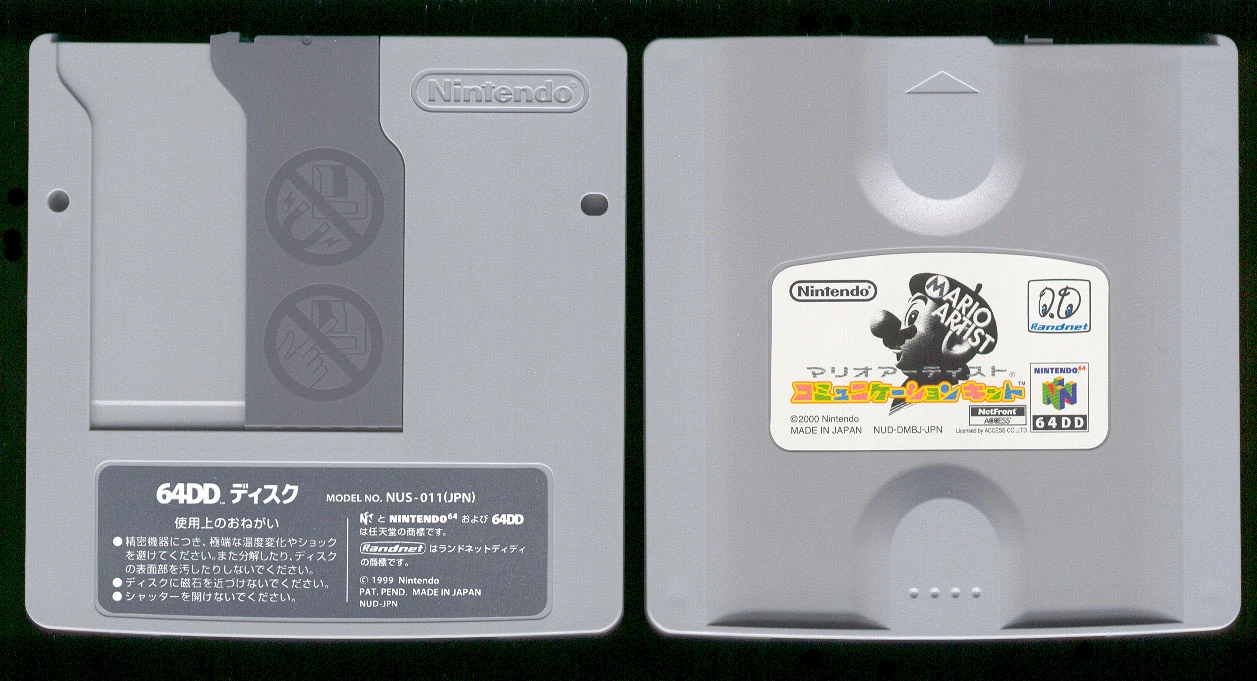
The add-on only had 10 titles for it, largely underappreciated because of how obscure it eventually all got as it only released in Japan. 64DD emulation was even not a real thing until 2015. Most of these games were sent to Randnet membres with no extra cost.
Mario Artist Paint Studio
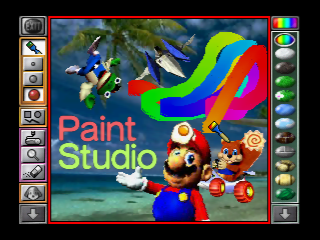 One of the launch games of the 64DD, this is first of the Mario Artist suite of 4 titles.
This one is basically the direct successor of Mario Paint on Super NES, and it even comes bundled with a brand new Nintendo 64 Mouse, it is the one who lets you draw pictures using a plethora of tools at your disposal: everything that you saw in Mario Paint is now better, more types of pens and brushes, bigger stamps, more backgrounds, more colors than just 15, and more. It also offers an easier to understand animation mode, which is more of a flipbook style animation instead of having a weird system of an animated object superimposed on a background in the original, where it was expected to use a VCR and stitch together different animations.
It took basically 5 years of development, where the project just kind of went from different concepts, one of which became 3D World mode, where you can explore… 3D worlds of course, take pictures but also retexture the entirety of those worlds as you want. Imagine making your own texture packs the way you want, and it can get pretty funny.
Unfortunately, the music maker did not make it, it was supposed to be part of Mario Artist Sound Studio, which never released. The Gnat Attack minigame also did not make it, despite it being pretty much done months before release, but an early build of Paint Studio was found with an almost fully functional version of it.
For all the Mario Artist titles, I recommend to have both a controller and a mouse accessible, both of them can be useful at the same time.
This game was fan translated in english by myself.
Doshin The Giant 1
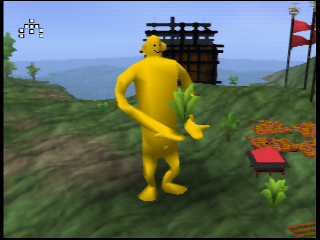 The other launch game of the 64DD, Doshin The Giant 1 is… a very unconventional game, and yes, the 1 is actually part of the title.
You’re playing Doshin, a giant who is born from the sea every day who has the ability to reshape islands and move the fauna around, in an attempt to please, or displease, the island tribes, which they then build villages and monuments over time. Natural disasters would also occur, making your job a little harder. Despite the game being only in japanese, the gameplay itself is actually fairly easy to understand, with the use of icons over using words to explain the needs of the people in each tribe.
I can’t easily try to explain this game very clearly, but definitely try to be curious and see what you can do with the world and the population.
The game was remade on GameCube years later, with a full graphical overhaul, but also revamped the game itself, with a different ending, but more importantly, a full localization in 5 languages (such as English) was done for Europe.
Randnet Disk
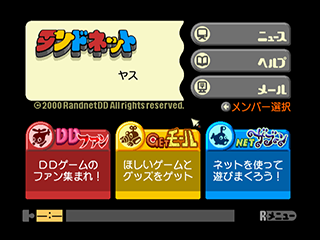
Sent in February 2000, this is the Randnet service browser disk that was initially delayed from launch. This would let you access the Internet, your emails, and use the Randnet services like a BBS (Bulletin Board System) that your membership would allow you, using the Modem Cassette on the main cartridge slot of the Nintendo 64 console.
Mario Artist Talent Studio
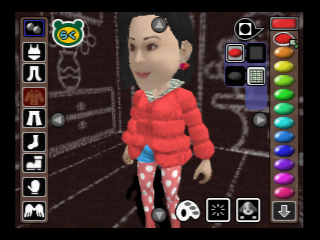
Another title sent in February 2000, this is the second title in the Mario Artist suite, it came with a microphone and the Capture Cassette, a cartridge with RCA video and audio inputs as well as mic input jack.
Imagine the Mii Maker but 6 years before, with characters that are more human-like and detailed, but with somehow a pretty insane amount of freedom over a lot of aspects for the time, I even think some of this rivals today’s complex character creators. You can even put those characters in motion captured short movies that Nintendo produced, or outright make your own movies with custom animations and backgrounds, which is insane.
For both this title and Paint Studio, you can use the Capture Cassette to capture video footage of pretty much anything, as well as using the Game Boy Camera through a Transfer Pak with a pretty rudimentary colorization system that you can use.
Like Paint Studio, I made an english patch for this one.
Sim City 64
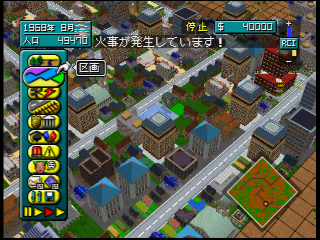
The last title sent in February 2000, this would be the first fully 3D Sim City title ever made.
Developed by HAL Laboratory of Kirby fame, it is the successor to Sim City from Super NES, with the return of Dr. Wright as your assistant. It takes inspiration from Sim City 2000, while streamlining the gameplay to kind of closer to the easy to play SNES version while allowing new features like the ability to walk in your own city, and talk to the citizens. You can even import a custom citizen animation from Mario Artist Paint Studio into the game!
An unfinished english translation by Ozidual exists.
F-Zero X Expansion Kit
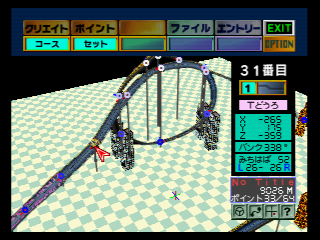
Sent in April 2000, this is the only released expansion disk for a Nintendo 64 game, in this case, for F-Zero X, initially released in 1998. It requires the japanese cartridge of F-Zero X to work.
It adds two new cups of six tracks each, DD-1 and DD-2, which are even harder than the rest, and more famously, it adds a track editor, which is actually the same one that that developers have used to make the base game’s course tracks, and a machine editor, which is not very complex compared to what F-Zero GX would do later.
It also adds better quality gameplay music, alongside even more music, and adds a brand new remix of Rainbow Road from Mario Kart 64 to the Rainbow Road track included in the base game.
You can even find bonus artworks of the pilots for use in Mario Artist.
It’s widely recognized as one of the best releases of the 64DD. You can also play a fan translated english version from Zoinkity using the disk file and the USA version of F-Zero X!
Japan Pro-Golf Tour 64
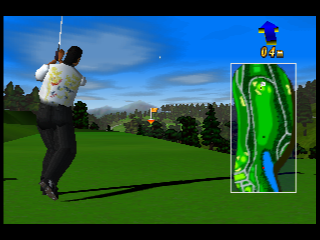
Unlike the others, this was not sent for free for Randnet members, you had to buy it seperately through the mail-order Randnet service (3500 JPY). It was launched in May 2000, and it is the only third party game in the 64DD library.
Made by SETA, who made already quite a few other golf and shogi games before, it is a pretty competent golf game, with its own gameplay where you tilt the stick to set your power and then release it. It is pretty fun!
Doshin the Giant: Tinkling Toddler Liberation Front! Assemble!
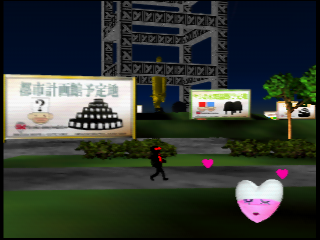
Likewise to the previous one, this was not sent for free; and it was limited to 3000 copies (for 3333 JPY). It also launched in May 2000, and acts as a sort of companion disk of Doshin The Giant 1, as you need a disk of Doshin The Giant 1 to play.
It is an incredibly weird game that summing it up wouldn’t real do it the most justice, but essentially, it’s a title that essentially implements random achievements to the original game, where each monument would unlock a building, and more achievements would unlock a small 30 second video, which were later released on VHS.
This video from LEXX talks about it very well as well as how painful it is: https://www.youtube.com/watch?v=TM7lAm-1bko
Mario Artist Communication Kit
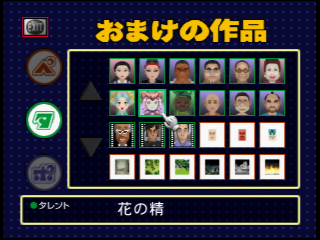
Sent in June 2000, this is the third title in the Mario Artist suite, though this time around, this is not focused on creation, but rather on the ability to use the Mario Artist Net Studio service from Randnet, where you could upload your own creations and download from other people using the Modem Cassette.
There are also hidden bonus creations in the disk that you can use in the other titles, as well as a much more involved capture option to use the Capture Cassette with a slightly deeper feature set than the others.
It also comes with an unused feature that was also in Paint Studio: The ability to use the Game Boy Printer using an unreleased N64 to Game Boy cable accessory and cartridge. More surprisingly: It also supports a completely unannounced Game Boy Printer Color accessory for full color printing.
Mario Artist Polygon Studio
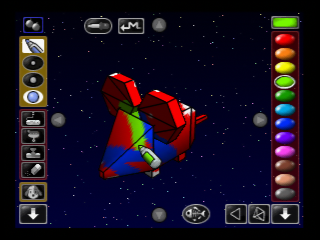
Sent in August 2000, this is the final 64DD title before the end of Randnet, and the fourth title in the Mario Artist suite.
This one would focus on 3D creation, such as using premade objects and assembling them together, or outright having 3D model creation with the same basic tools as a lot of 3D modelers on workstations, but heavily simplified, but still powerful. It comes with tutorials, and you can draw on the custom 3D model like you would in 2D with Paint Studio. You can also make a diorama of your creation.
It comes with 2 minigames, Go Go Park (Chicken Race) where your model is a friction car where you try to charge just enough to reach the end of a cliff without falling, and Sound Bomber, a compilation of fast paced microgames using your model as the main character. If that last one sounds familiar, it’s because it is the very same concept of what would be WarioWare later.
And unjustly unknown, the object assembling aspect is also a tool of vehicle creation (using what’s called Power Blocks), to be used in Jikken World (Experimental World), an open world mode where you explore the world using your transformative vehicle and find even more vehicle parts to unlock and explore further.
Alongside the other main two titles, this was fan translated in english by myself.
Dezaemon DD
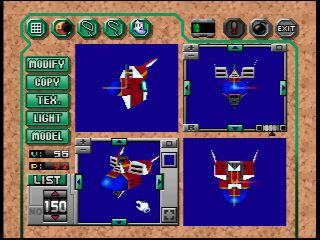
Unreleased, this is an expansion disk for Dezaemon 3D, one of a series of shoot ‘em up game makers spanning several consoles by Athena.
You can make shoot ‘em ups with custom graphics, and also has a music editor that works very much like Mario Paint’s. Dezaemon 3D’s uniqueness in the series is obviously the use of 3D, you can make custom 3D models and make custom animations and more. It was also the first Nintendo 64 game that supported the 64DD for expansions and even the N64 Mouse peripheral!
Several development disks were found of those, which unlocks the ability not only to make more than one game in a single disk, but also removed many limitations of the editor, allowing much much more graphics, 3D models, levels and music.
An english patch of Dezaemon 3D was made by Zoinkity and Whowasphone404, where you can use those disks as well.
Recently, the Dezaemon series is being rereleased in the Console Archives series by Hamster Corporation on Nintendo Switch 2 and Playstation 5, who have bought the rights, so definitely look into those!